Gear

You do not need a professional kitchen to make excellent bone broth. These four pieces of gear cover pressure cooking, straining, safe pouring, and storage—then you are ready for bones, water, and your first foundational batch.

  1. 01

    Instant Pot (6 qt or 8 qt)

    A pressure cooker collapses long simmers into a practical weeknight workflow. Use Low Pressure Cook Mode or Broth / Stock Mode programs (depending on your model) to extract collagen and flavor from bones without babysitting the stove all day. Choose 8 qt if you often work with large beef bones or want bigger batches for the freezer; a 6 qt is plenty for chicken, fish, and everyday portions.
  2. 02

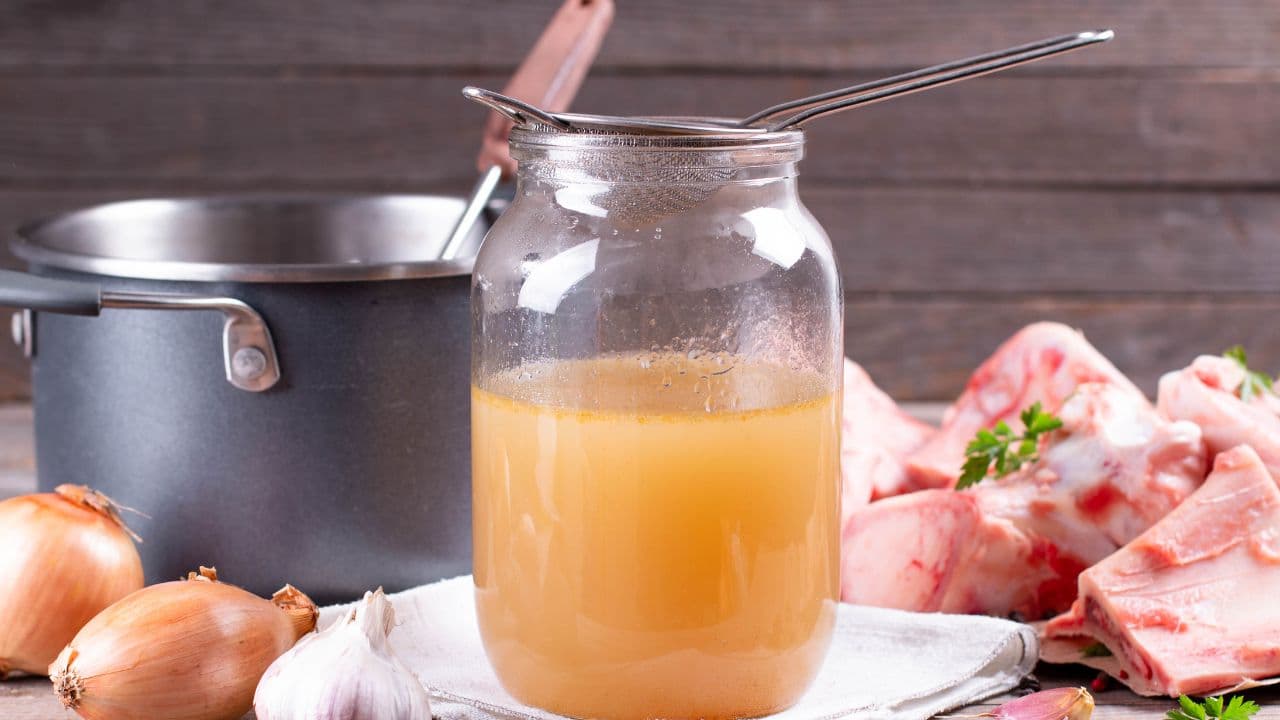
    Tight mesh strainer

    After cooking, you need to separate liquid from bones, aromatics, and fine grit. A fine mesh strainer (not a coarse colander) catches small herb fragments and sandy sediment so your broth stays pleasant to sip and ready for pho, ramen, or storage. Strain into a large bowl or measuring cup you can pour from easily.

  3. 03

    Ladle

    Hot broth is awkward to pour straight from a heavy pot. A sturdy ladle lets you transfer strained broth into jars for the fridge or freezer, skim into a tasting cup, or fill a second pot when you are building a layered bowl—without drips or burned fingers. Look for a deep bowl and a handle long enough to clear the rim of your Instant Pot liner.

  4. 04

    Glass jars

    Strained broth keeps best in clean glass jars with tight lids—wide-mouth pints and half-pints are easy to fill and thaw. Leave a little headspace if you freeze so the liquid can expand without cracking the jar, cool broth before sealing, and label with the date—see the freezer guide below for headspace and safe filling.

How to store bone broth in the freezer

Cool the broth, then pour it into a freezer-safe jar. Do not fill to the rim.

Fill only about two-thirds of total volume. Broth expands when frozen; headspace gives ice and vapors room so pressure does not build up and the glass jar is less likely to crack in the freezer. Store for up to 6 months in freezer.

Seal, date the jar, freeze, and thaw in the fridge before using.

Next: pick a foundational broth

Once your pot, strainer, ladle, and jars are in place, choose a base recipe—beef, chicken, or pork are forgiving starting points—and simmer your first batch for the freezer.